
§ 0 · Coord · for unit coordinators and program directors

The semester, properly set.

Coord is the working desk for an Australian unit coordinator: the outline, the weeks, the assessments, the team, the exceptions, the marking, the moderation and the results file, in one ruled workspace. It sits beside the university's systems and never pretends to be one of them.1

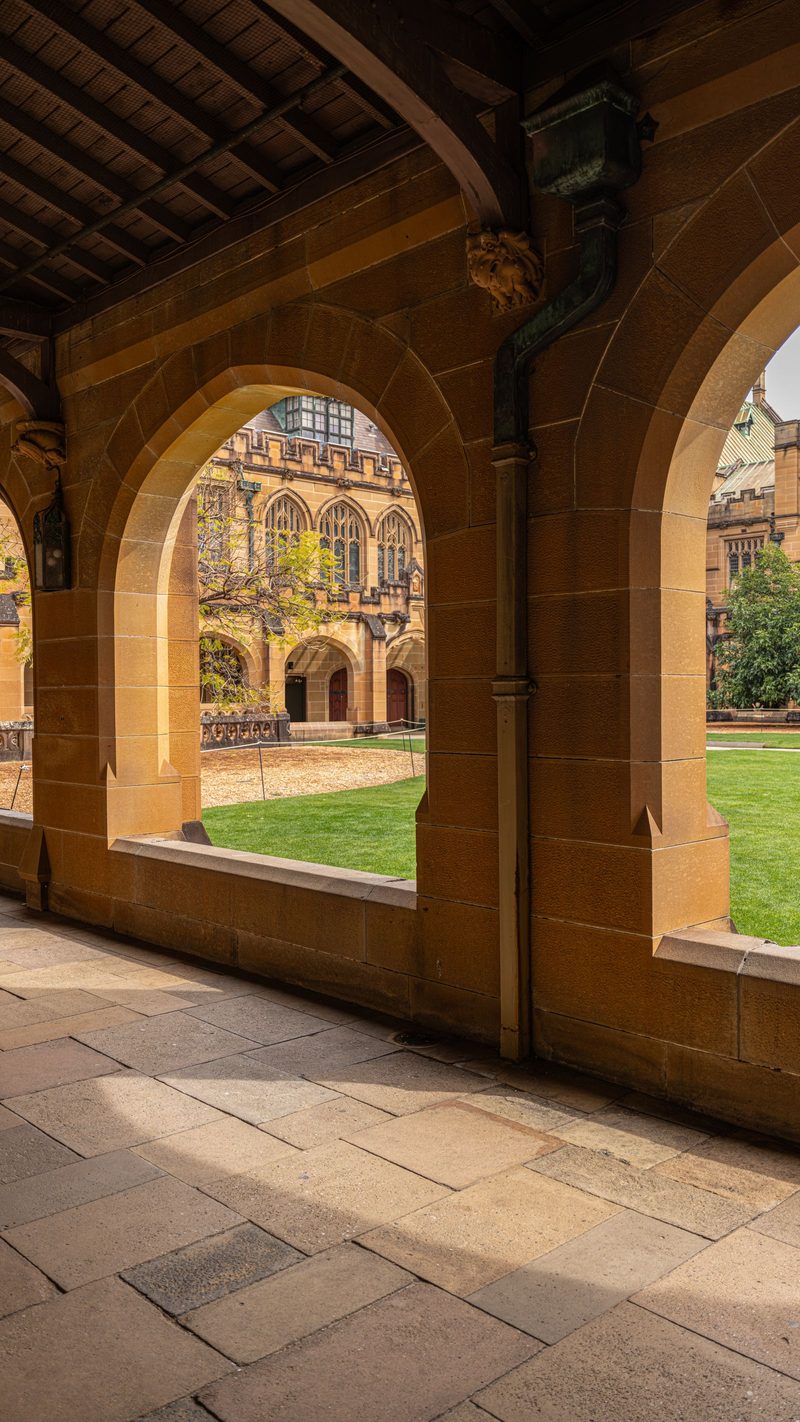
A sandstone archway opening onto a university quadrangle, rendered in ink duotone.
Fig. 1Sandstone, 9 am, week 1.

Week ruler and census countdown

UNSW Sydney · T3 2026 · starts Mon 14 Sep 2026

  1. W1
  2. W2
  3. W3
  4. W4
  5. W5
  6. B
  7. W6
  8. W7
  9. W8
  10. W9
  11. W10
  12. S
  13. E

Census Thu 8 Oct 2026

Dates from the university's published calendar; the census tick is circled because it is the one date that moves a student's fee liability.3

§ 1 · Errata

Twelve spreadsheets, four inboxes and one census date you cannot miss.

A coordinator's work is spread across systems that were built for someone else: the student system for the class list, the LMS for marks, a portal for extensions, a payroll form for tutor hours, an inbox for everything else. The errata below are the ones that come up most often in the research. Each is a thing Coord keeps in one place.

  1. deleMarks in a spreadsheet nobody else can open.
  2. caretModeration notes in an email thread.
  3. transposeA timetable on a PDF from March.
  4. stetTutor hours estimated in February and never reconciled.4
  5. pilcrowAn extension granted in a portal that does not talk to the gradebook.5
  6. daggerA results file re-typed by hand the night before the board.6
Bundles of paper files stacked on a shelf, in ink duotone.
Fig. 2What the coordinator inherits.
§ 2 · Contents

Thirteen weeks. One edition.

A unit has the same shape every time. Coord is organised in that order, so the page you need is the next page.

Contents
Ch.StageWhat is on the pageFolio
IDesignOutline, learning outcomes, assessment mapp. 1
IIApproveVersioned outline, sign-off, the APPROVED stampp. 2
IIIDeliverThe week view, sessions, tutors, roomsp. 3
IVAssessRubrics, extensions, special consideration, the exceptions ledgerp. 4
VMarkThe marking desk: rubric in the margin, hours capturedp. 5
VIModerateCalibration, sampling, second marking, the MODERATED recordp. 6
VIIReleaseGrade bands, holds, the results file, the RELEASED stampp. 7
VIIIReviewUnit review, improvement plan, handoverp. 8
§ 3 · Chapters

Four openers.

Each feature is a chapter, not a card. The full set is in the tour.

Chapter 1

Census dates you cannot scroll past.

Every teaching period is stored with its own census date, break, study week, exam window and results date, taken from the university's published calendar.3 The term plan is back-scheduled from the hard dates: outline approval, early feedback before census, marking turnaround, exam paper lodgement, results due.

The Week Ruler at the top of this page is the same one that runs across every page of the workspace, with today's caret on it.

An empty examination hall with rows of single desks, in ink duotone.
Fig. 3Rows, before the papers arrive.
Chapter 2

A week view that reads like a timetable, because it is one.

Sessions are set as a ledger, days as columns and hours as rows, with the type in small caps and the room in mono. This week's ledger lists what is due, whose marking is open, who is away, and which tutor is double-booked.

Weekly notes hold the announcement draft and the tutor briefing, so Monday morning starts with a page rather than a search.

Slow light moving across a rough sandstone wall.
Fig. 4Light across sandstone, a plate that moves.
Chapter 3

Marking that keeps the rubric where a marker's eye already is: in the margin.

The marking desk is a split folio, the work on the left and the rubric and comments in the margin, driven from the keyboard. Every script records the time it took, so the hours ledger is built from evidence rather than from an estimate made in February.49

Allocations by group, at random or by hand; a comment bank; a holistic override that needs a reason; the total set large with its band beside it.

A fountain pen nib in close-up, in ink duotone.
Fig. 5The nib, before the first comment.
Chapter 4

Moderation with the whole cohort on one page.

Calibration before marking; a sampling plan that pulls every narrow fail and every high distinction; second marks against a tolerance; per-marker distributions laid against the cohort; and a one-page moderation record for the assessment board.11

Nothing is ever scaled automatically. Every adjustment keeps the raw mark and a reason, and the record says who decided.

A hand writing in a notebook beside a closed book, in ink duotone.
Fig. 6Second marking, by hand.
§ 4 · Interop

Speaks the LMS’s language, and yours.

Class lists arrive as Callista tab-delimited files, PeopleSoft rosters, TechnologyOne spreadsheets, SITS extracts and Banner grade sheets. Marks come and go as Canvas, Moodle, Blackboard, Brightspace and Gradescope exports with their column ids preserved. Fourteen dialects are detected from the header row alone; everything else maps by hand, and Coord remembers the mapping.1213

Every table exports. Every export re-imports. See the full matrix.

Student,ID,SIS User ID,SIS Login ID,Section,A1 (12345)
    Points Possible,,,,,100
Ang Li,4471,z5123456,z5123456,T09A,74
✓ SIS User ID → student number
✓ A1 (12345) → Assignment 1, column id kept
Fig. 7A gradebook header, read and mapped.
§ 5 · Imprint

What we hold, and where.

Read the imprint

§ 6 · Edition

Priced for the person who holds the card.

The coordinator seat is the unit of value. Tutors, markers, moderators and guests are free on every plan.18

Editions, in Australian dollars
FreeCoordinator ProSchoolUniversity
PriceA$0A$19 a month · A$99 a semester · A$190 a yearA$1,690 a year for 10 seatsQuote
Active offerings1UnlimitedUnlimitedUnlimited
Students per offering1502,5005,000Unlimited
Programs3UnlimitedUnlimited
Moderation and results packPreviewYesYesYes
Casual hours and timesheets1 offeringYesYesYes
Admin console, PIA packYesYes

Free

Price
A$0
Active offerings
1
Students per offering
150
Programs
Moderation and results pack
Preview
Casual hours and timesheets
1 offering
Admin console, PIA pack

Coordinator Pro

Price
A$19 a month · A$99 a semester · A$190 a year
Active offerings
Unlimited
Students per offering
2,500
Programs
3
Moderation and results pack
Yes
Casual hours and timesheets
Yes
Admin console, PIA pack

School

Price
A$1,690 a year for 10 seats
Active offerings
Unlimited
Students per offering
5,000
Programs
Unlimited
Moderation and results pack
Yes
Casual hours and timesheets
Yes
Admin console, PIA pack
Yes

University

Price
Quote
Active offerings
Unlimited
Students per offering
Unlimited
Programs
Unlimited
Moderation and results pack
Yes
Casual hours and timesheets
Yes
Admin console, PIA pack
Yes

Prices in Australian dollars, GST inclusive on self-serve plans.19 Full pricing and footnotes.

§ 7 · Colophon

Set your first unit this afternoon.

Import a class list, put the census date on the ruler, and see the semester as one page. Forty-five days of Coordinator Pro, no card, then a Free plan that stays useful.18

Notes

  1. Coord complements and never replaces the university's curriculum system, LMS, student system or payroll. Every mark it emits is provisional until the system of record publishes it. Product statement; see Trust.
  2. Cloudflare's documentation states that D1 “Jurisdictional Restrictions (data location / storage) options are not supported today” and likewise for Workers KV. Location hints influence primary placement but are not a residency guarantee. Cloudflare, Data Localization Suite compatibility documentation.
  3. Teaching-period dates (start, census, break, study week, exams, results) are taken from each university's published academic calendar for 2026 and 2027 and stored, never derived. Where a calendar was not published, the date is marked inferred. University academic calendars, retrieved September 2026.
  4. “Casual staff are paid one hour per student for marking per semester. In reality, I routinely take at least double.” NTEU, Overloaded (May 2026), free-text response; 4,421 staff surveyed.
  5. Extensions, special consideration, access plans, deferred exams, re-marks and appeals arrive through several portals and email, and must be reconciled against the gradebook. Institutional special-consideration and assessment policies; coordinator role descriptions.
  6. On 17 December 2025 an Australian university reissued every Semester 2 results email after a processing error sent many students another student's grades. Student press and university statement, December 2025. The university is not named here on purpose.
  7. Teaching administration was named the top time sink by 72% of academics, and 89% said their digital systems give no efficiency gain (350 academics, 37 universities). Woelert, P., Chesters, J., Martinussen, M. and Gannaway, D. (2025) Science and Public Policy.
  8. Median annual hours as course coordinator: 275 at Level B, 155 at Level C (665 academics, 2016 and 2018 surveys). Kenny, J. and Fluck, A. (2019) Australian Universities' Review 61(2).
  9. “There should be no averaging of hours across multiple weeks … to ensure that the University complies strictly with its record-keeping obligations”; marking within seven days of a class cannot be bundled into the tutorial rate. The University of Queensland, guidance note on casual academic hours, 2026.
  10. Marking is separately paid work that cannot be rolled into a lecture rate, and “the amount of associated time actually spent is a matter for the employee and not subject to direction by the employer”. Full Federal Court of Australia, Torrens University decision, 17 March 2026.
  11. Documented moderation, calibration and second marking are required by institutional assessment policy and expected under the Higher Education Standards Framework. Higher Education Standards Framework (Threshold Standards) 2021, Standard 1.4; institutional assessment policies (Griffith, RMIT, UNSW).
  12. Which LMS each university runs was verified against the institution's own pages in September 2026. By site count across about 350 Australian and New Zealand institutions, Moodle holds about 60% and Canvas about 19%. Institutional LMS pages; ListEdTech market data, 2025.
  13. Student-system vendors and file shapes were verified against vendor announcements and login fingerprints. Tribal states Callista serves 23.8% of the Australian higher-education market. Tribal Group announcements (2021, 2024); TechnologyOne, Oracle and Ellucian customer evidence.
  14. Sign-in is a link and a six-digit code, no passwords; student email, phone and notes are encrypted at rest with an organisation-scoped key; every change is audited; full export at any time; deletion runs as a job and produces a receipt. As built; see Security and Privacy.
  15. Assessment, monitoring of student subgroups, and international-student obligations under the Threshold Standards and the ESOS National Code; sensitive information under state and federal privacy law. Higher Education Standards Framework (Threshold Standards) 2021; ESOS Act 2000 and National Code 2018; Privacy Act 1988 and state information privacy principles.
  16. Indigenous status is sensitive information; a teaching tool should not store it. Referral to the university's Indigenous education unit is the right action, not a flag in a third-party database. Maiam nayri Wingara Indigenous data sovereignty principles (2018); Victorian Information Privacy Principle 10.
  17. The Higher Education Standards Framework references the Web Content Accessibility Guidelines; university procurement commonly asks for a WCAG 2.1 or 2.2 AA conformance statement. Higher Education Standards Framework (Threshold Standards) 2021, Domain 7; Disability Discrimination Act 1992, s 24.
  18. The coordinator seat is the unit of value; tutors, markers, moderators, guests and co-coordinators are free collaborators on every plan. Every new organisation gets 45 days of Coordinator Pro without a card, then the Free plan. See Pricing.
  19. Australian Consumer Law requires a single total price for consumer sales, so self-serve prices are shown inclusive of GST; invoiced institutional plans are quoted ex-GST. Competition and Consumer Act 2010, Schedule 2, s 48.
Know your load

What the job actually takes, on paper.

Your teaching, marking, coordination and service, beside the hours you were allocated. A monthly statement with the method beside every figure.

Your record belongs to you. Only you can see it unless you share it; organisations see category totals for groups of five or more.

71% of NTEU 2025 census respondents regularly worked beyond paid hours.1 A national study reported median annual coordination loads of 155–275 hours for Level C and B academics in small centres.2 University underpayments covered by three Fair Work undertakings exceed $70 million.3

COORD · activity statement · illustrative figures

What the job took.

Alex Morgan · August 2026

Example recorded workload against allocation
CategoryRecordedAllocatedDifference
Teaching18 h16 h2 h over
Marking24 h12 h12 h over
Coordination14 h8 h6 h over
Service5 h2 h3 h over

61 h recorded. 38 h allocated.

Method: visible active time, marking sessions and entries confirmed by the author. Service counts are separate from measured time.

Your record, in your hands. A statement with the method beside the figures.